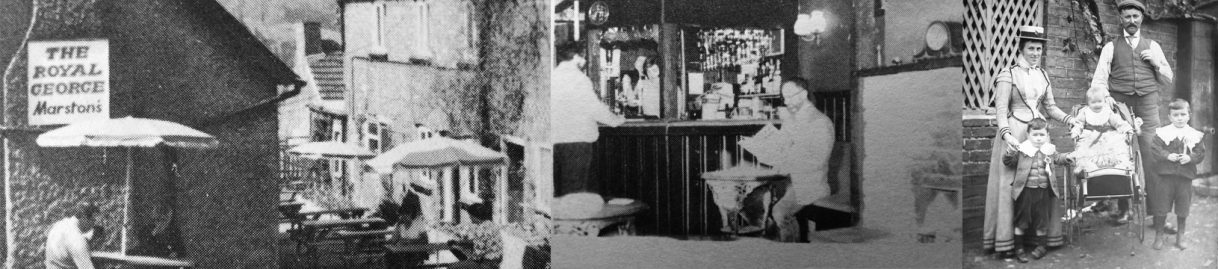
The Royal George public house on Blind Lane is one of the oldest buildings in the village, and can possiibly even claim to be the oldest pub in England!
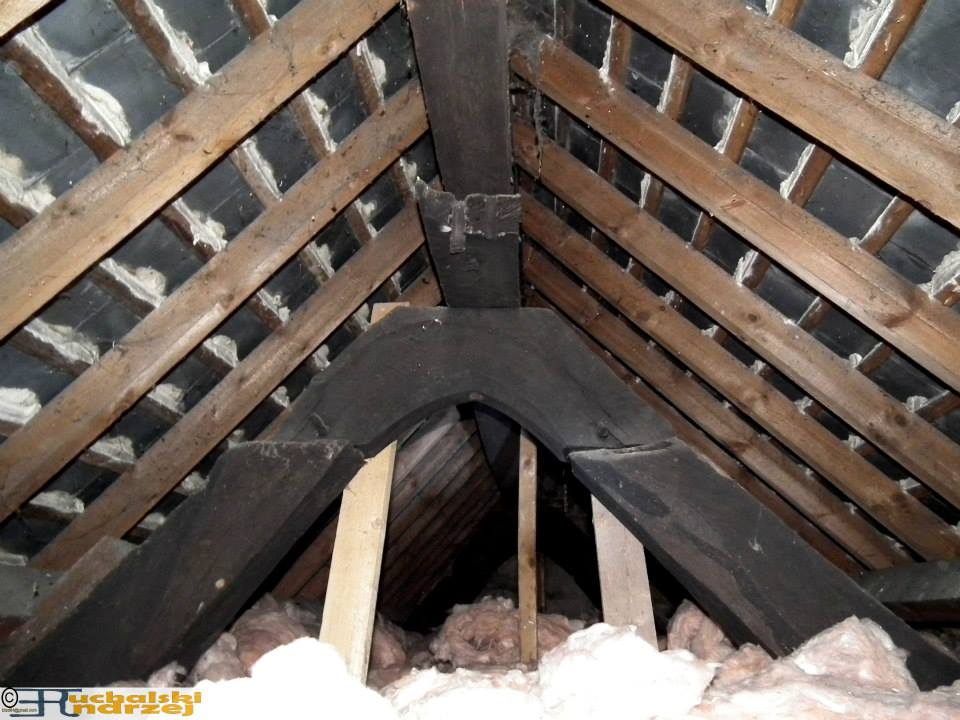
The bottom lounge dates back to the 13th Century, when it would originally have been a medieval hall house with full (floor to ceiling) cruck trusses making a wooden frame, surrounded by walls of wattle and daub. These walls have subsequently been replaced with ironstone walls that exist to this day. There would have been a large central fire set inside the building, and smoke-blackened timbers in the roof are evidence of this.
Source: Andy Puchalski
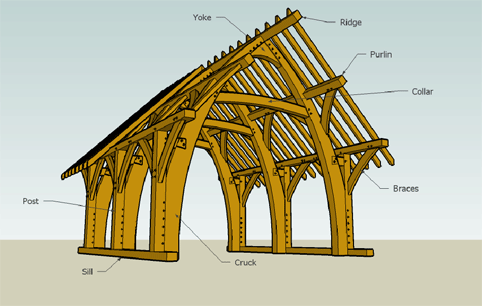
Source: https://naturalbuildingblog.com
The top of the cruck trusses can be seen in the upper room and roof of the pub and when, in 2000, local master carpenter Laurie Beadsworth commented he’d never seen anything like them before, the then landlords Colin and Wendy Reed arranged for scientific ‘dendrochronology’ tests to be carried out on the beams in Oxford.
The tests revealed that the trees that made the trusses were cut down in 1261/62, with construction having most likely taken place in summer 1262. This makes the Royal George the earliest known domestic cruck building in England. The cruck trusses are unusual in two respects – being floor to ceiling, rather than on top of a wall, and because they are made from two separate trees (one very crooked – a clear sign of an early construction period) rather than a single tree split in two, which was the normal way.
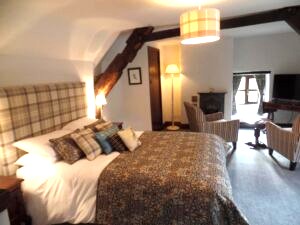
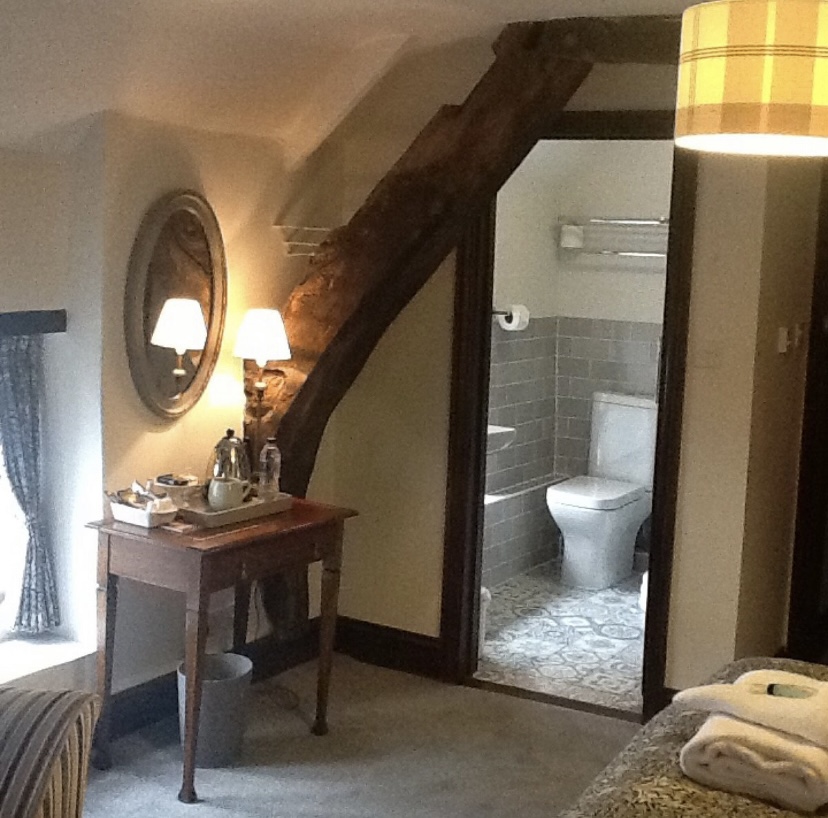
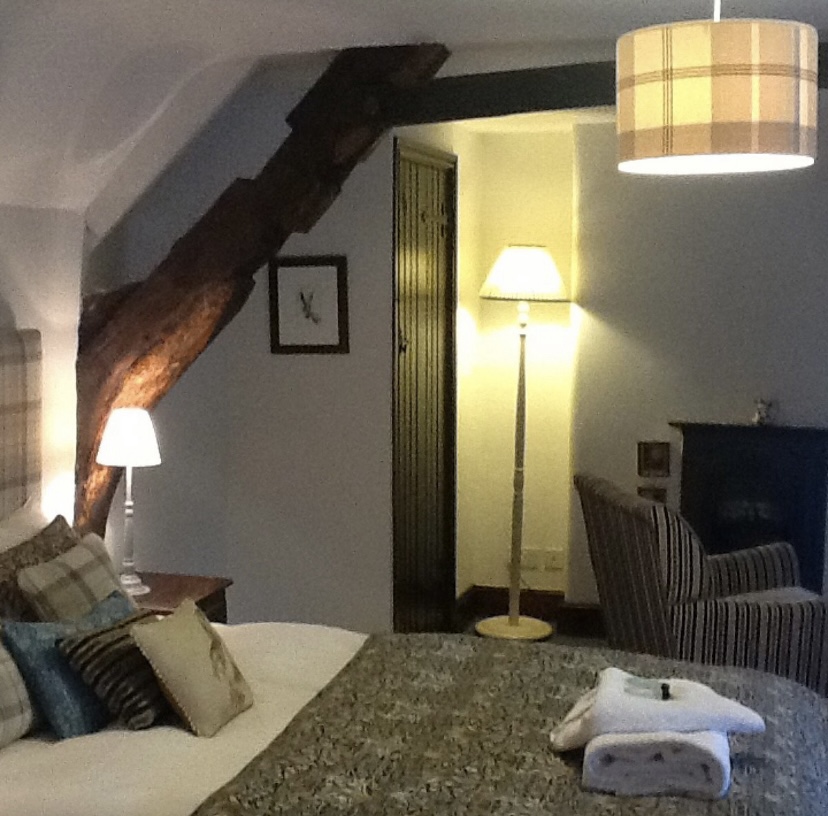
Cruck beams visible in the Heritage B&B room above the bottom lounge
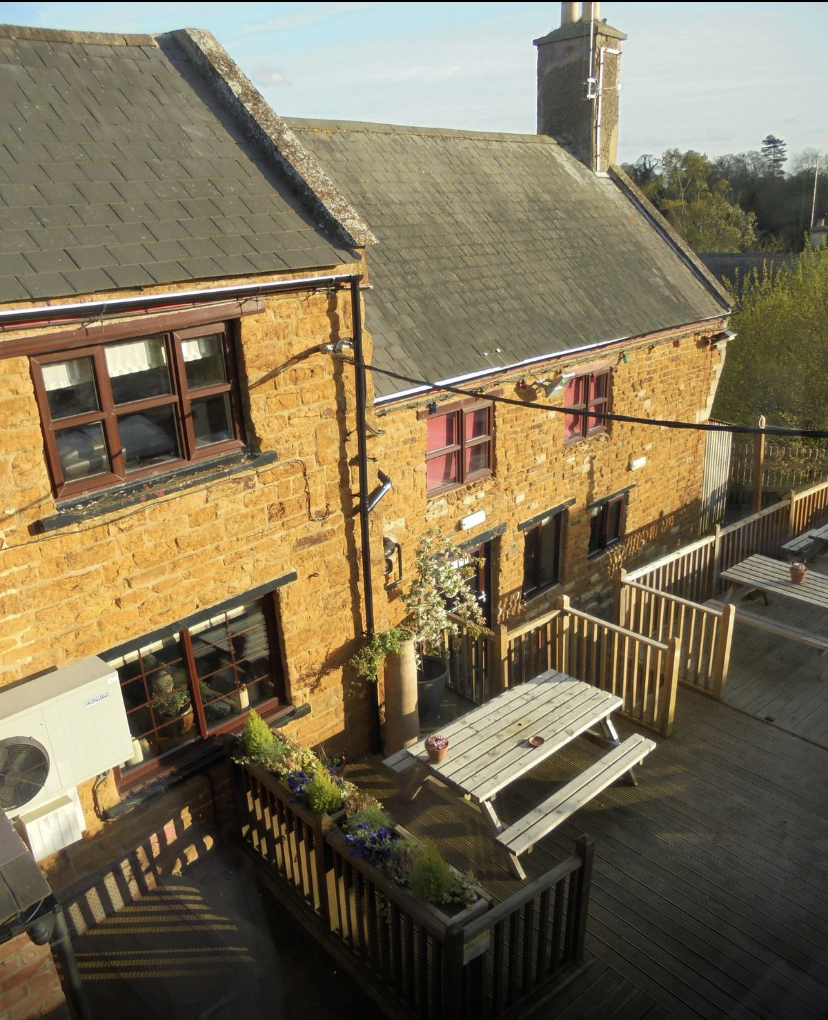
Southern gable end
According to public records, the way the western corner on the southern gable of the pub is cut back (pictured below) indicates a ‘much trafficked route, with the cut permitting access around the corner angle’, suggesting the building’s use as an inn right back to medieval times. This construction made it easier for horse drawn coaches to round the corner.
What’s in a name?
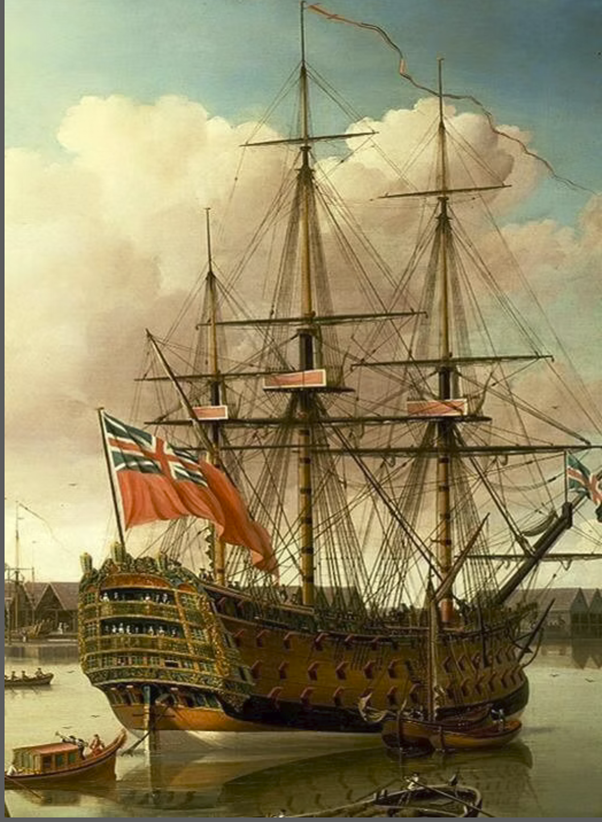
Despite its 750 year history, the Royal George name only dates back to the 18th Century., being named after the Royal Navy’s 100 gun flagship HMS Royal George. Laid down as the HMS Queen Anne in 1746, she was renamed in honour of the reigning monarch King George II before her launch in 1756, at which time she was the largest warship in the world. She served until her demise in 1782, when she was ‘heeled over’ too far for repairs to her hull in Portsmouth, sinking in 65 feet of water.
We understand that the pub first applied for a liquor licence in 1780 (presumably they didn’t need one before then), and former Landlord Colin Reed has said that all public houses granted a licence in 1780 were named the Royal George in honour of the great warship’s victories that year. Not sure how true this is though.
Development of the pub
The 13th Century bottom lounge and the middle lounge, which was added in the late 18th Century and forms part of the historical development of the building, achieved Grade 2 listing in 2017.
The present kitchen used to be a slaughterhouse and the 1854 Post Office Directory lists the publican Thomas Reynolds as ‘Royal George and butcher’. In the 1851 Census, Mary Reynolds is listed as landlord with her family members as butchers.

The top part of the pub (now a restaurant) was built in 1920. The Royal George was two separate buildings up until 1992 when Colin and Wendy Reed added the link between the current pub and the kitchen and toilets. View Facebook conversation
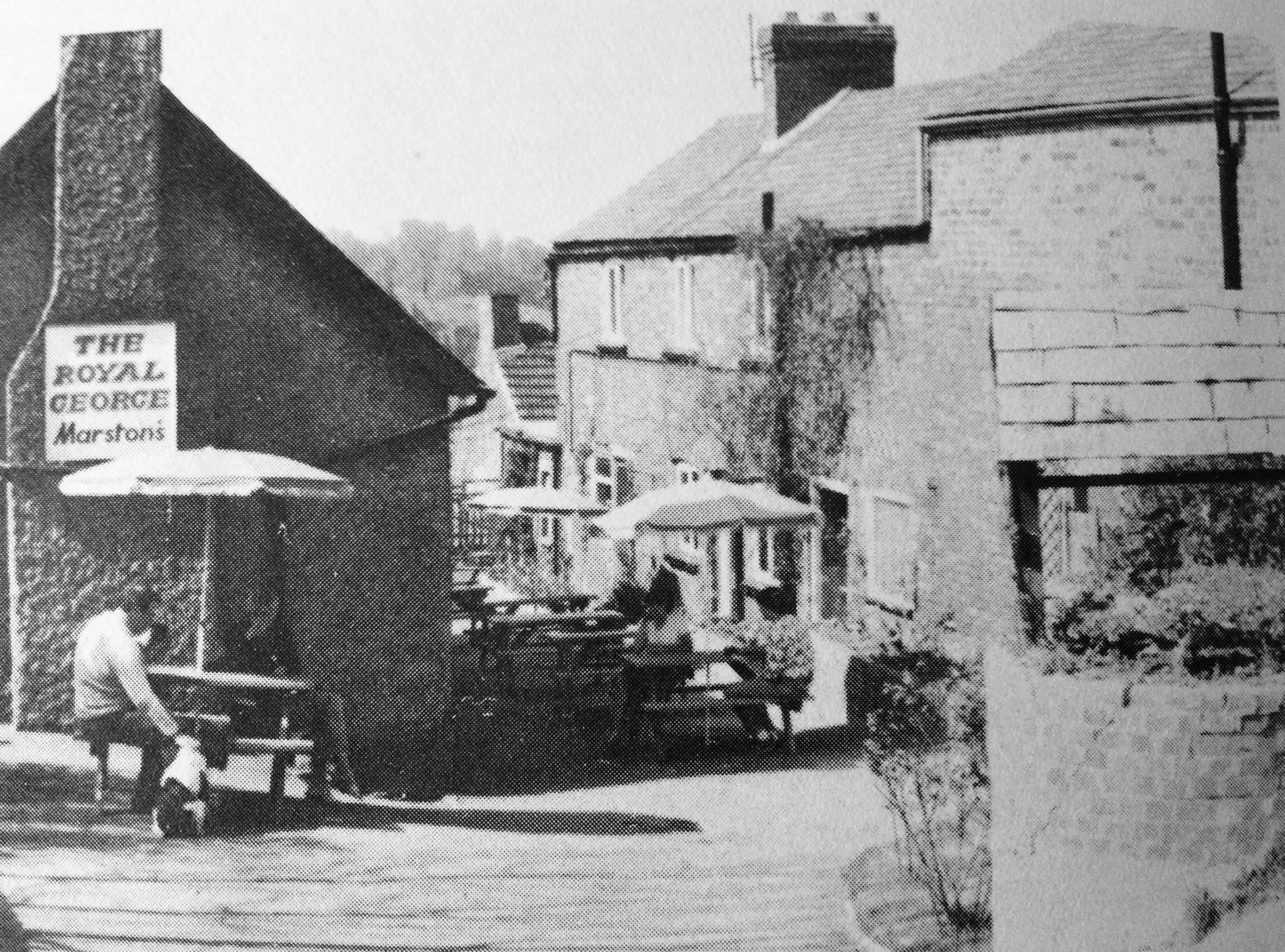
Source: Mark Shirley
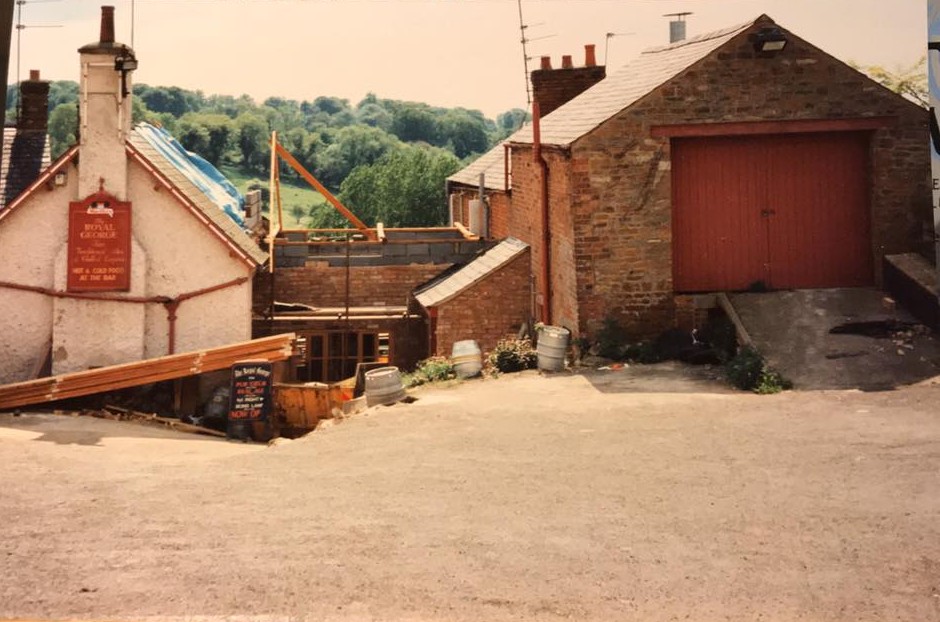
Source: Kevin Gibson
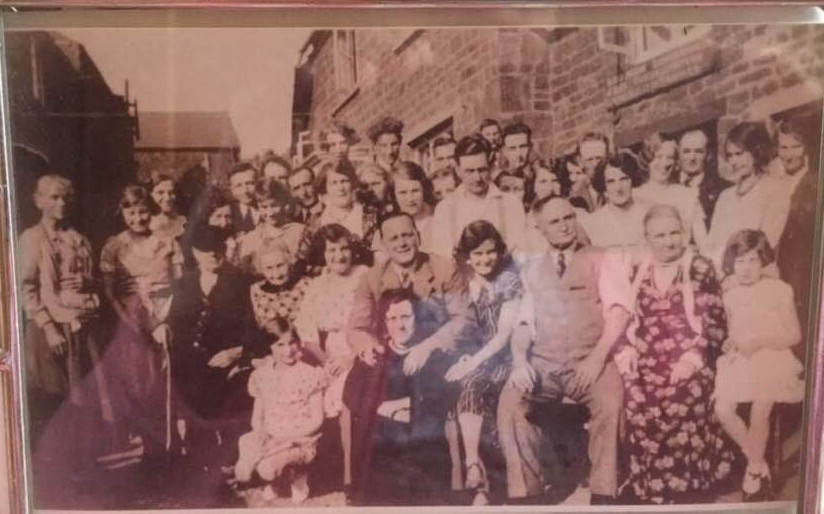
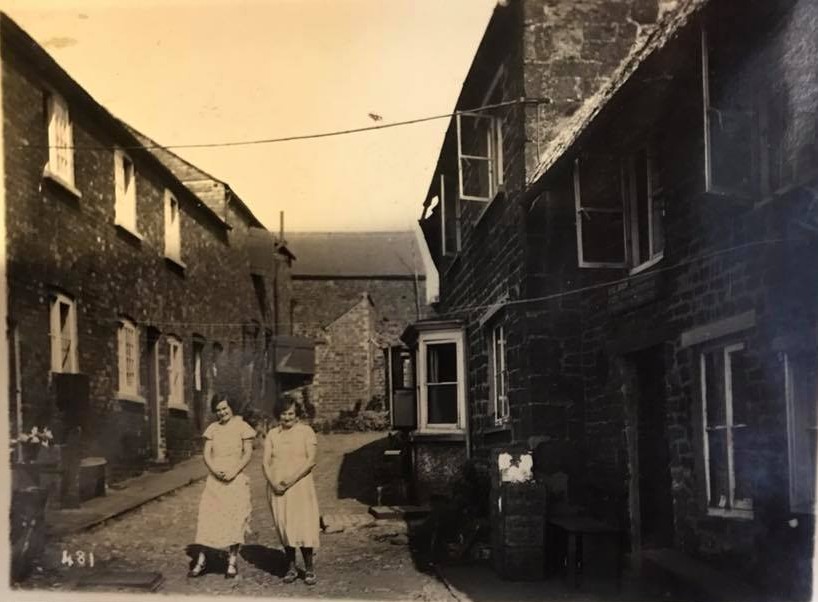
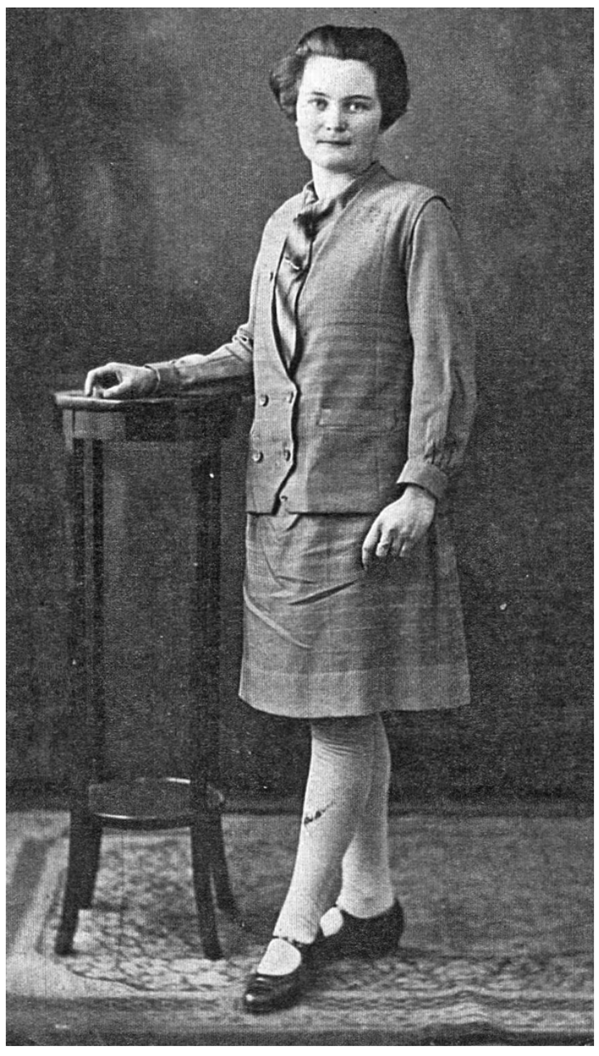
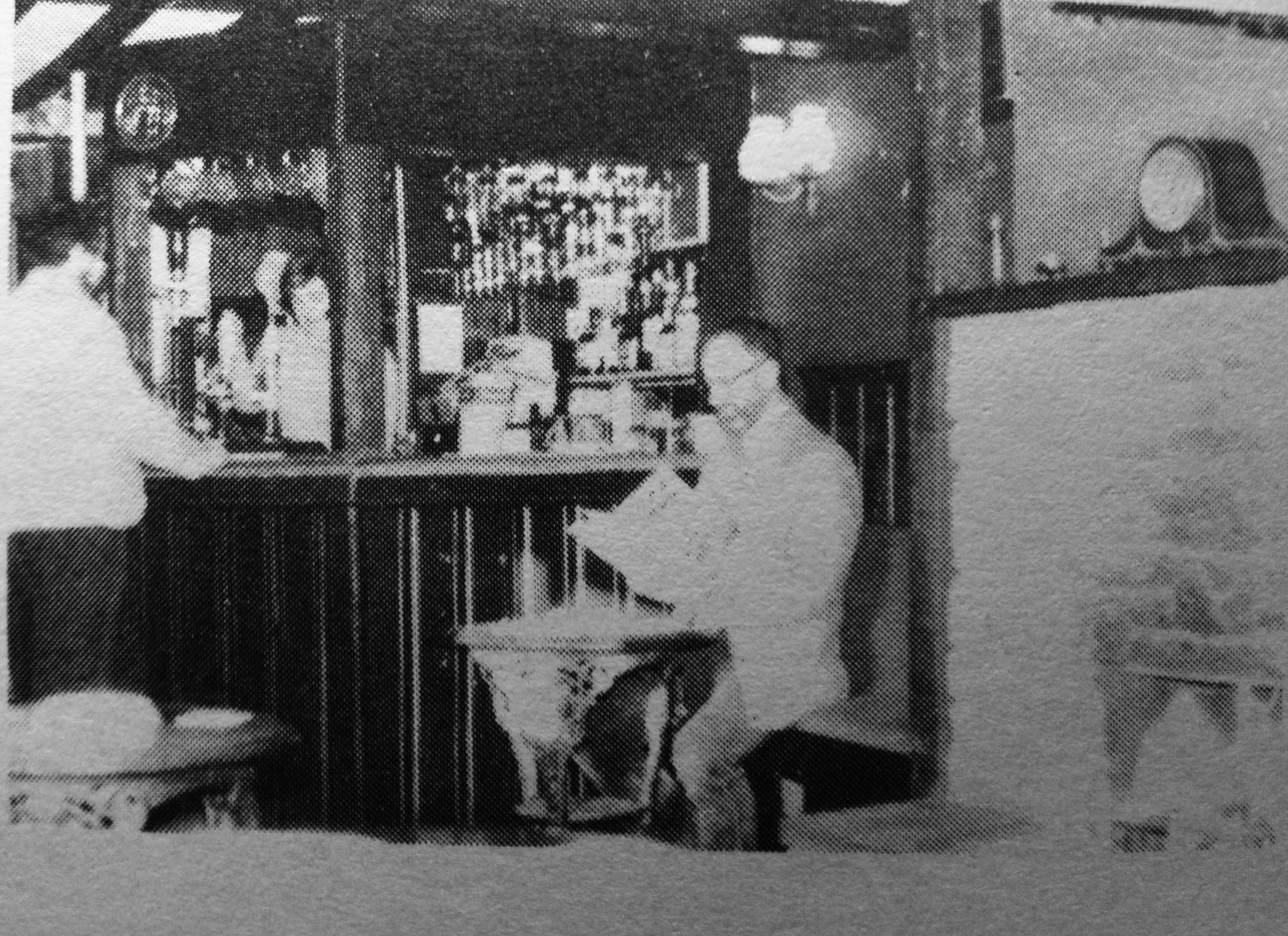
The next picture, and the picture further down the page of Ruby Panter (nee Jackson), were taken from the bottom end of the pub, looking up towards Blind Lane in the 1930s, when the Jacksons were Landlords. On the right of the photos, you can see the pub’s bottom and middle lounges, and on the left is where the kitchen and laundry room is now, long before the link was built. View Facebook conversation.
Landlords and owners
The Royal George has seen many landlords and owners pass through its doors. The 1841 Census lists John and Charlotte Cooper as malster and landlady and, from the 1850s to the 1890s, the Reynolds family (Mary and Thomas then Samuel and Betsy) ran the pub.
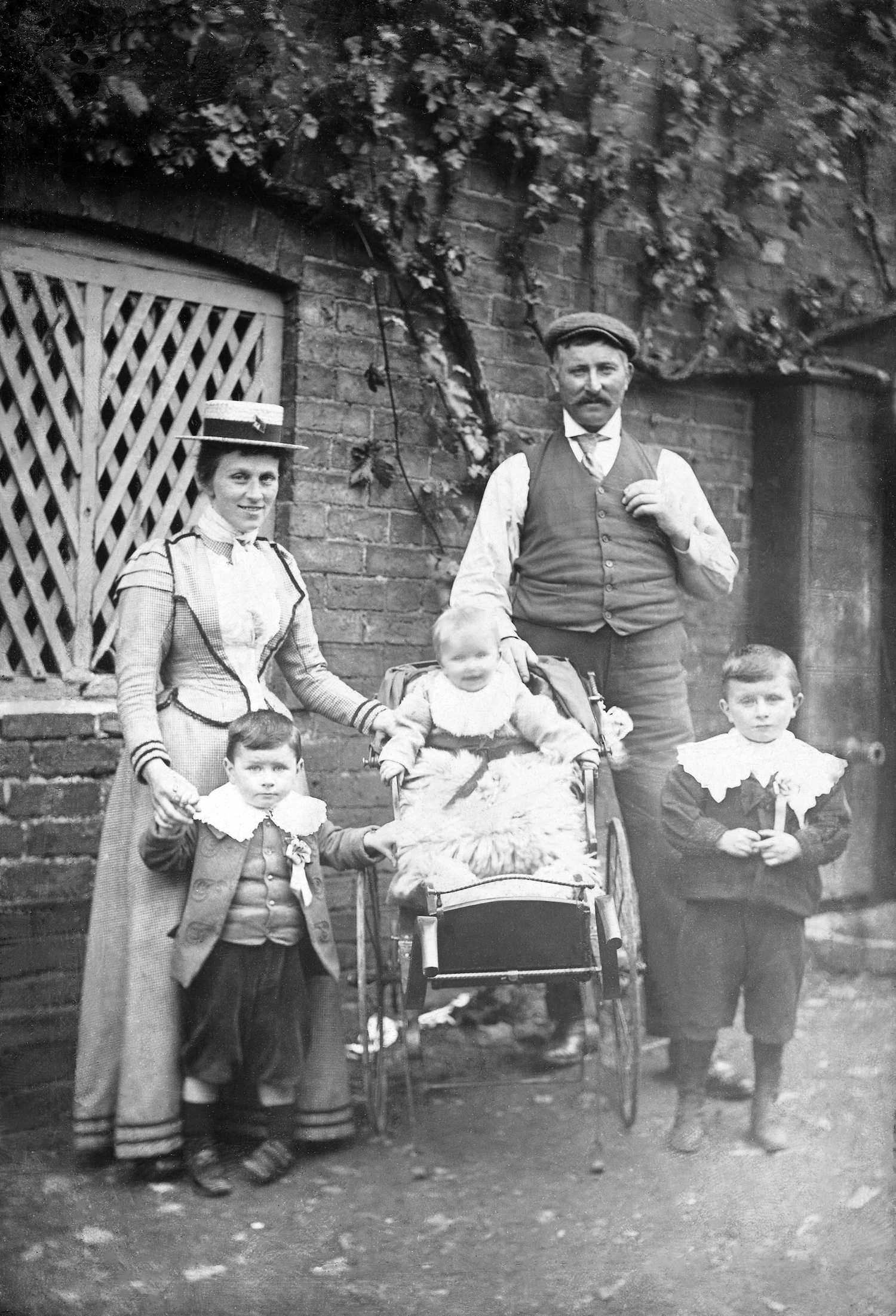
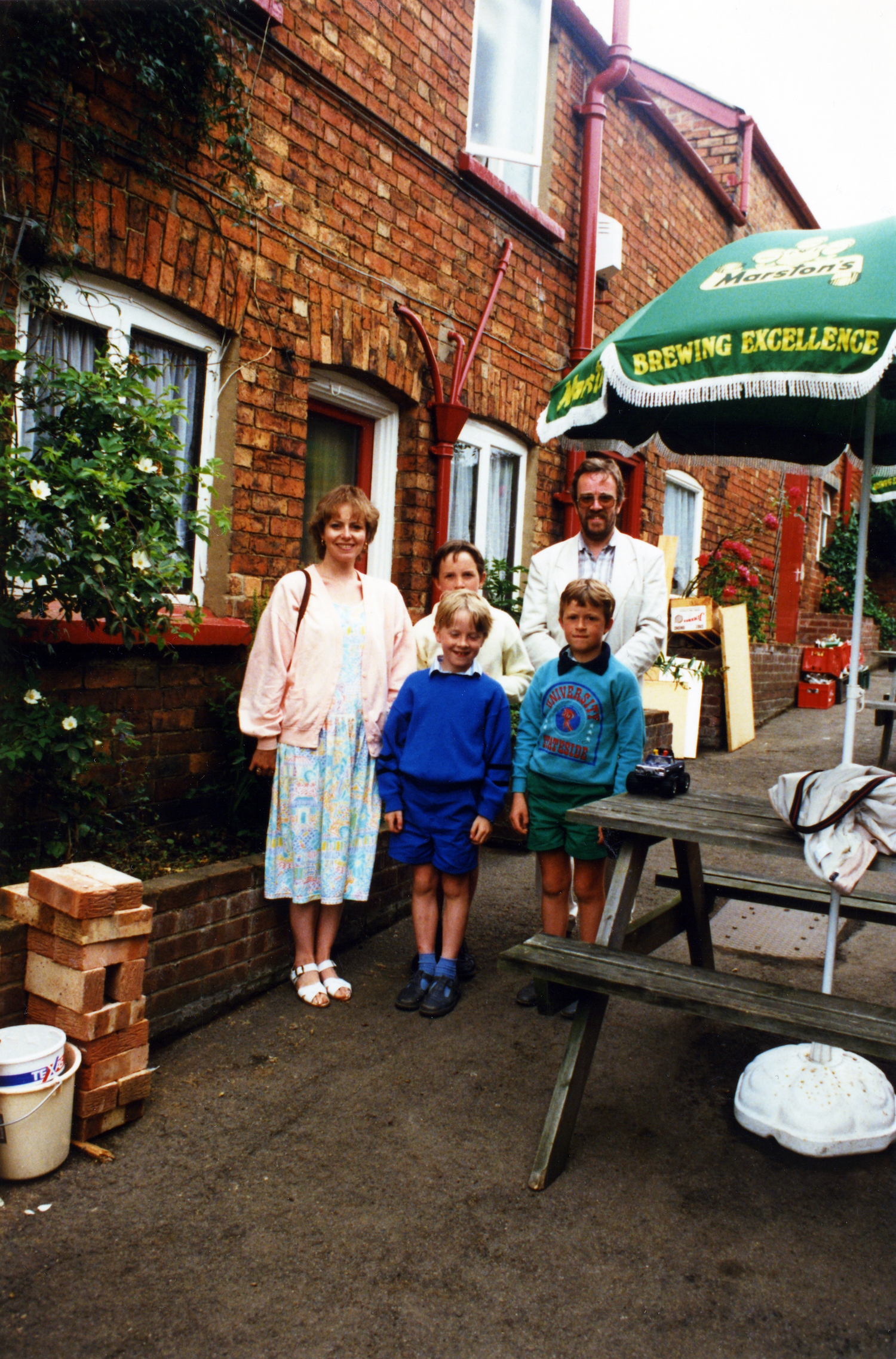
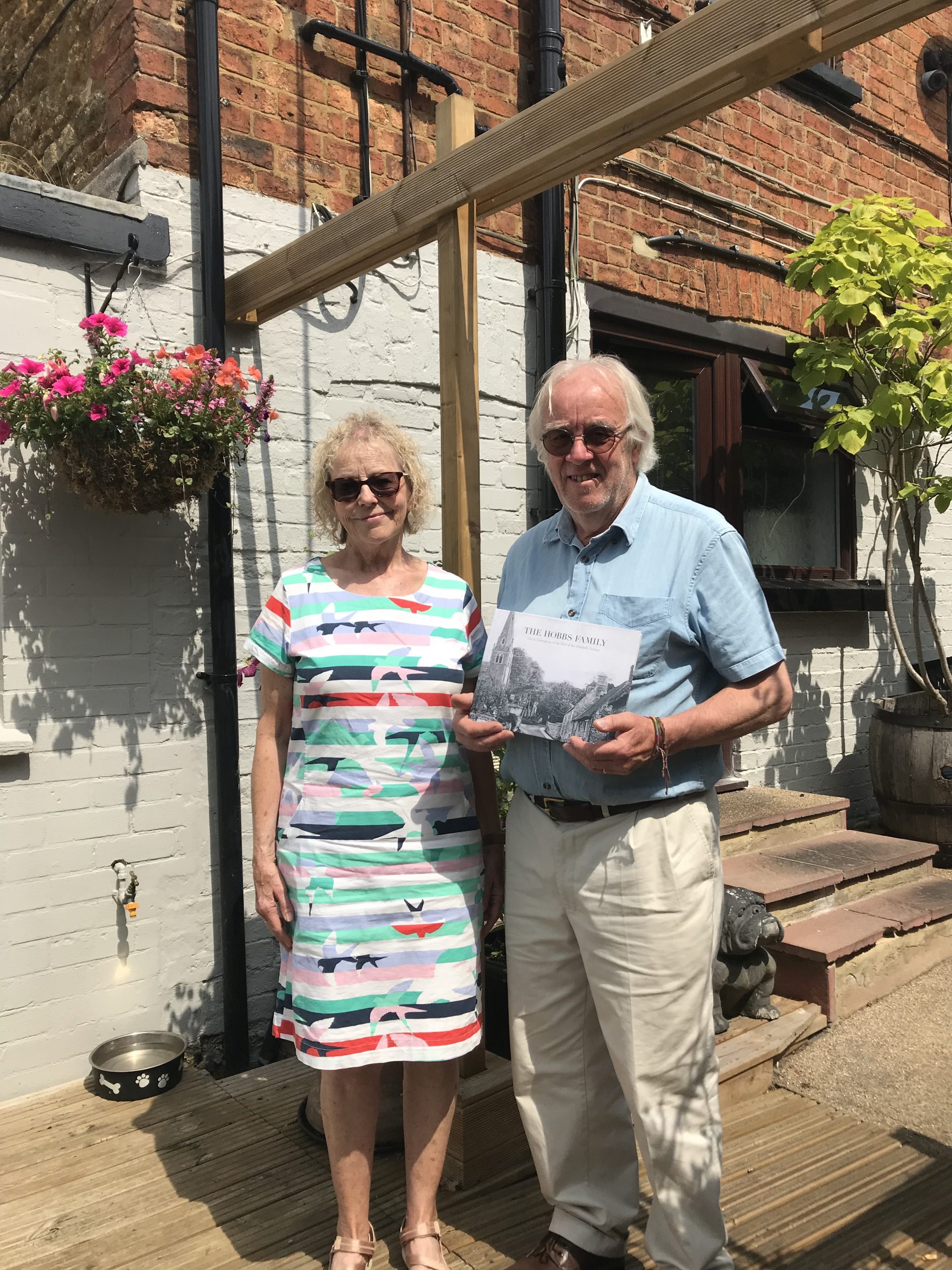
At the turn of the 1900s, Andrew Hobbs was running the pub and did so for nearly 10 years until his wife Sarah apparently got fed up with the big dinners she had to prepare! Being open all day, it was also hard work with three young children to care for, so the family moved on to run Manor Farm in Cottingham. Andrew’s grandson Graham Hobbs, son of Andrew’s fourth child David, visited Cottingham in 1988 with his family and again in 2019 with his wife Jill, to recreate the 1904 picture.
Source: Graham Hobbs
Source: Jane Smith
Herbert Almond is listed as landlord in the 1906 and 1914 Kelly’s Directories.
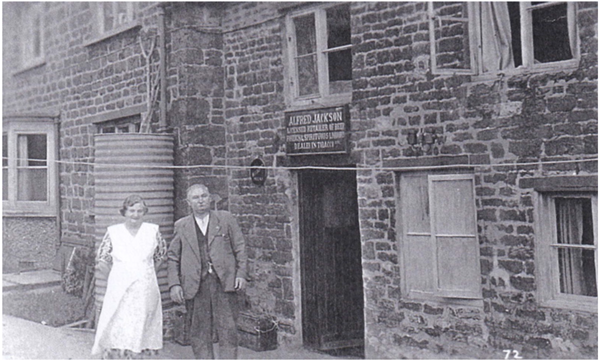
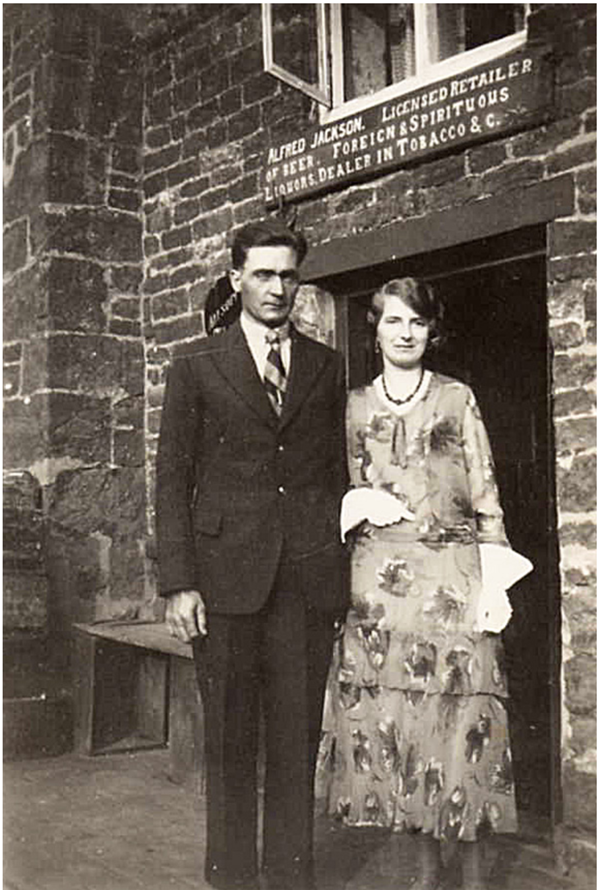
The Jacksons ran the pub from 1925 to the 1950s. Alfred Thomas Jackson, known for most of his life as Tom, took over in 1925. He lived in the pub with his wife Caroline (nee Claypole), and their eldest son Ivor lived in the cottage attached to the pub. Tom and Caroline’s descendant Janice Binley tells us that the pub was the scene of many family weddings and parties, and a holiday home for cousins from London who visited quite often in those days.
Daughter Ruby, who spent most of her teenage years at the pub, helping out, could also play the piano, and Tom and Caroline would organise concerts at the pub to raise money for the British Legion, as Tom was a former soldier, having served with the Northamptonshire Regiment to the rank of Lance Corporal.
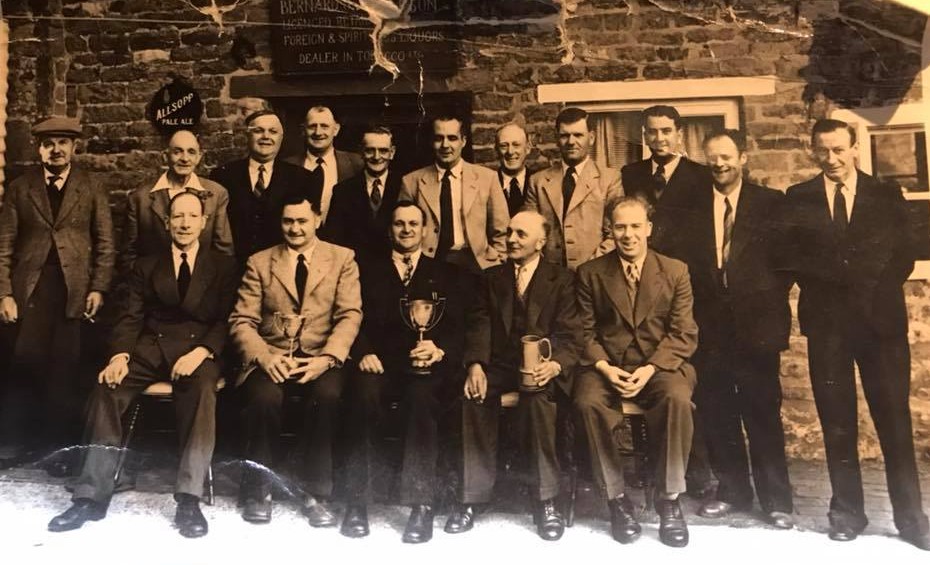
Tom and Caroline retired from the Royal George in the late 1940s, when their middle son Bernard Jackson and his wife Elsie took over the licence. You can see Bernard’s name as licensee in the 1950s skittles photograph further down the page, although he seems to have been known to most as Peter Jackson! Source: craxfordfamily.co.uk.
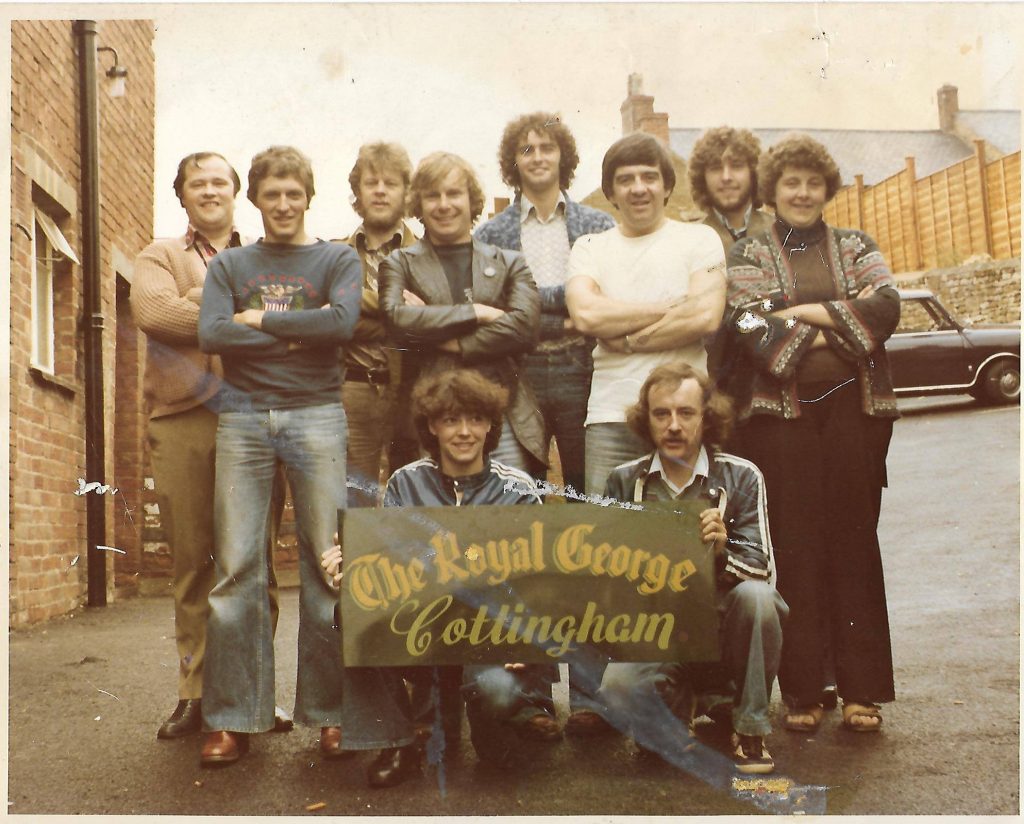
Tom and Dorothy Smith took up the reins for most of the 1960s, followed by Tom and Madge Wilson. Colin and Wendy Reed took over in 1975 and ran the pub for 27 years through to 2001. The Reeds were succeeded by Mass and Wendy Farabella, then Kevin and Debbie Gibson (2016-2024).
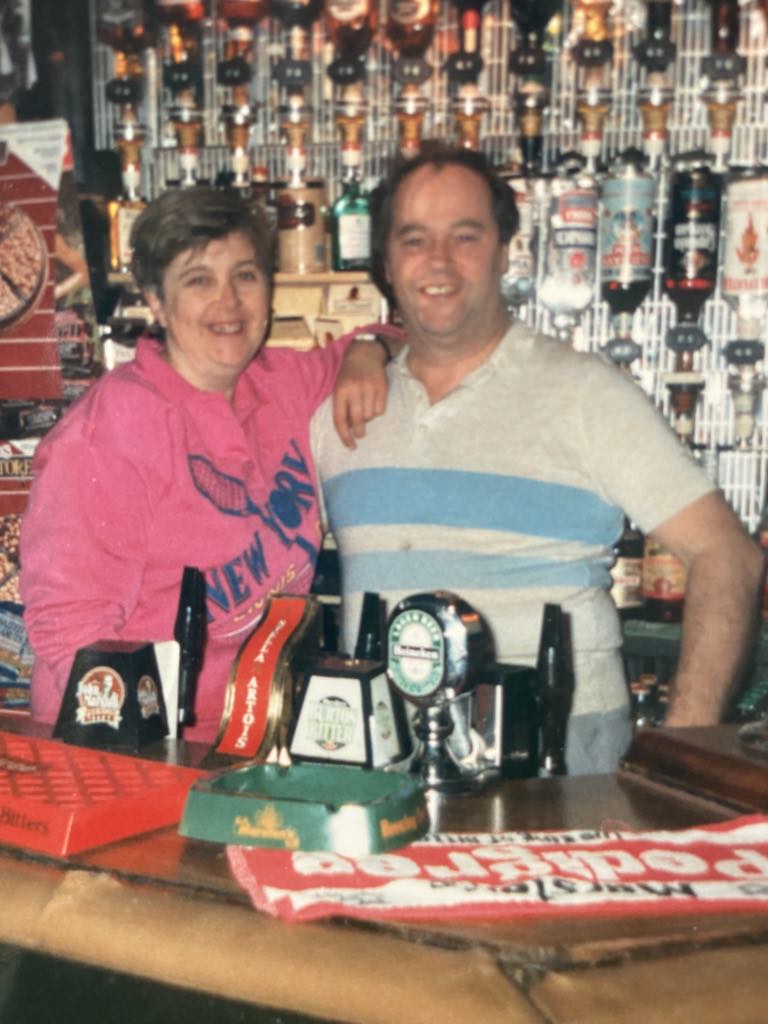
Fiona Millar tells us that, when Tom and Madge ran the pub, Madge’s daughter Angela and Fiona’s younger sister Sheila accidentally set fire to the house! Colin Reed would later show Fiona how they had fixed it up. “It was lovely,” says Fiona. “I pulled my first pint there. I think I was 12”.
Fun and games
Source: Kevin Gibson
Source: Kevin Gibson
View Facebook conversation (picture 2)
Royal George Pool Team, late 1970s/early 1980s. They were very good, by all accounts!
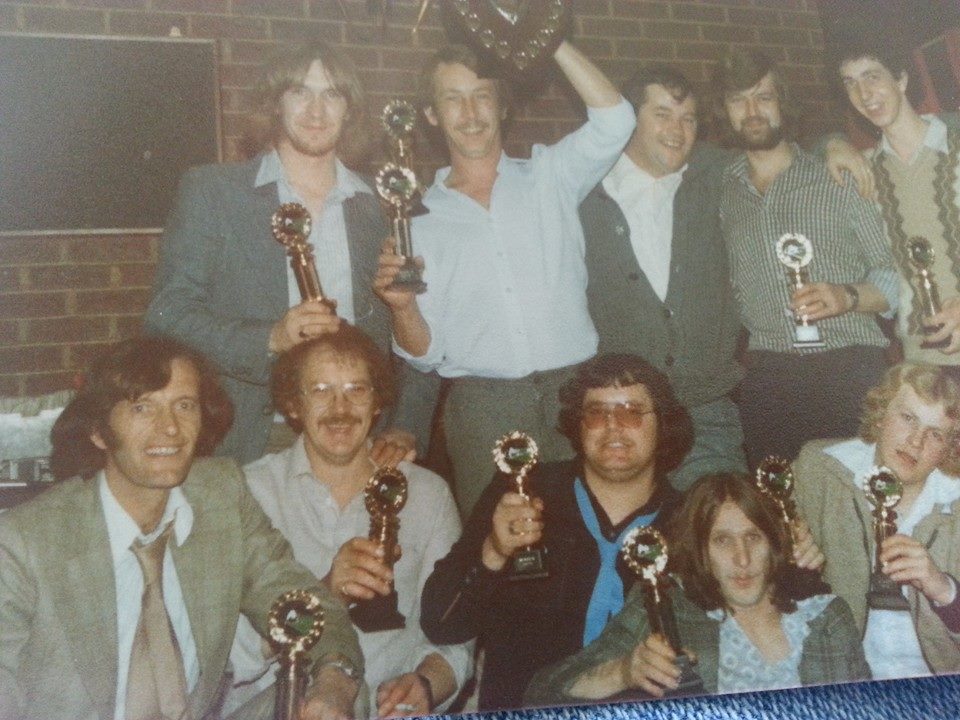
Click for names. Source:: Ross Fotheringham
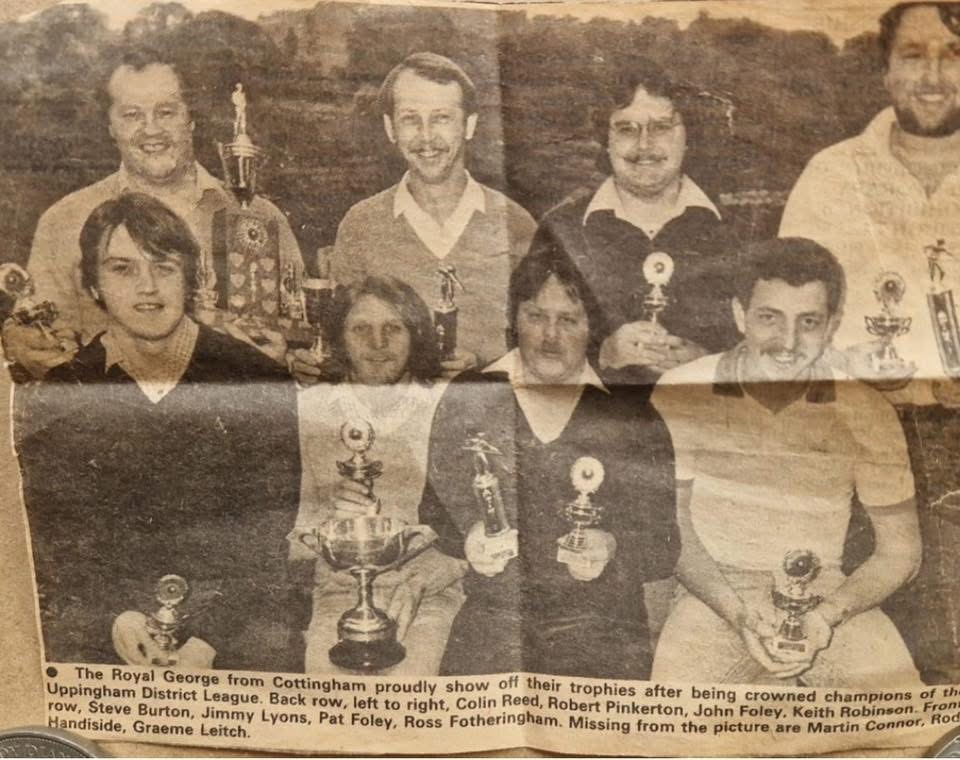
Click for names. Source: Pat Foley
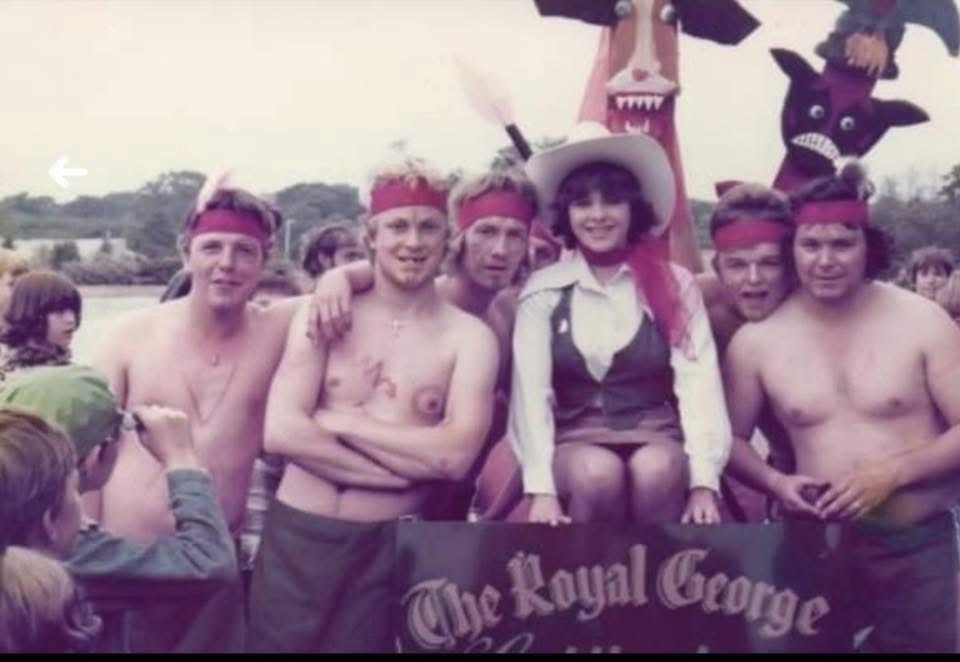
The Royal George team for the Corby Bed Race, which took place around Corby Boating Lake in the late 70s and early 80s. A team from the Red Lion pub in Middleton also took part. Another year, the Royal George team dressed up as babies in nappies, with the bed turned into a cot.
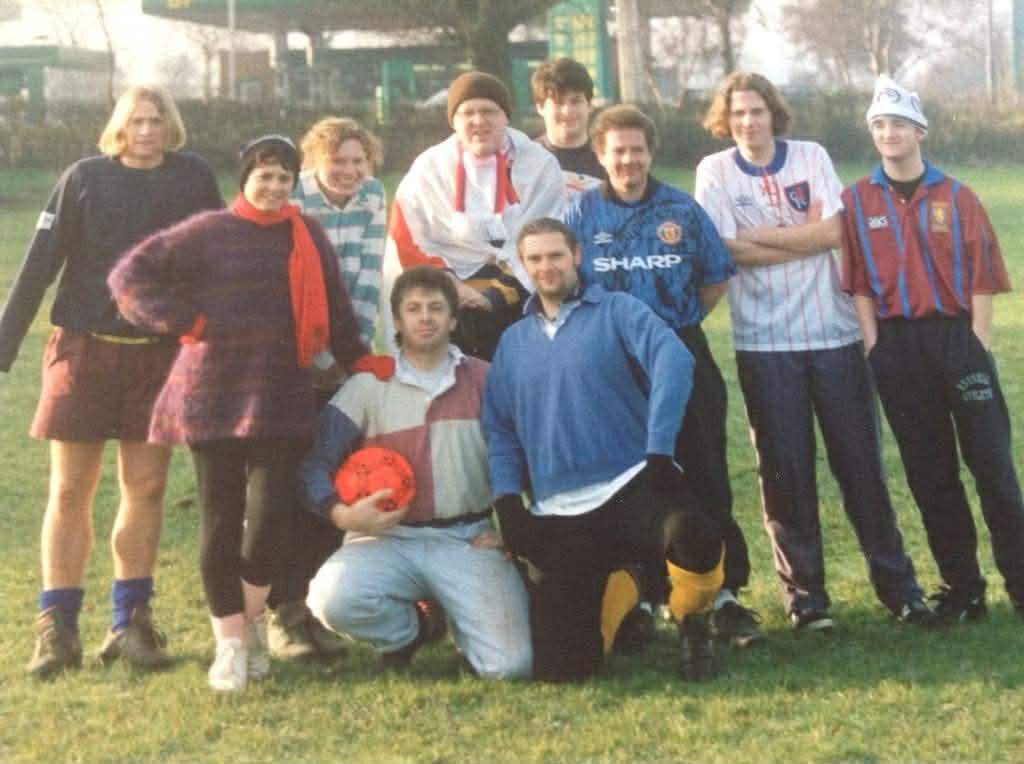
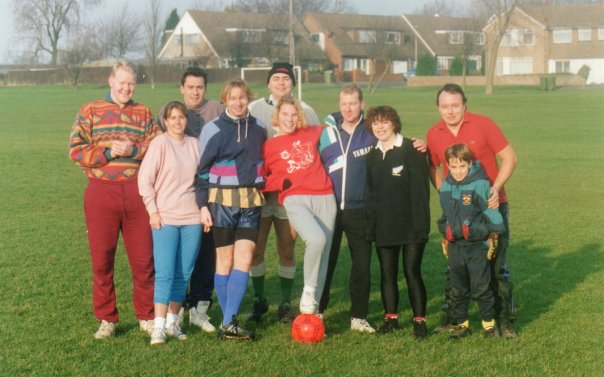
The Royal George Boxing Day football match was an annual tradition. These pics, taken on the Cottingham recreation field, are from 1994. View Facebook conversation.