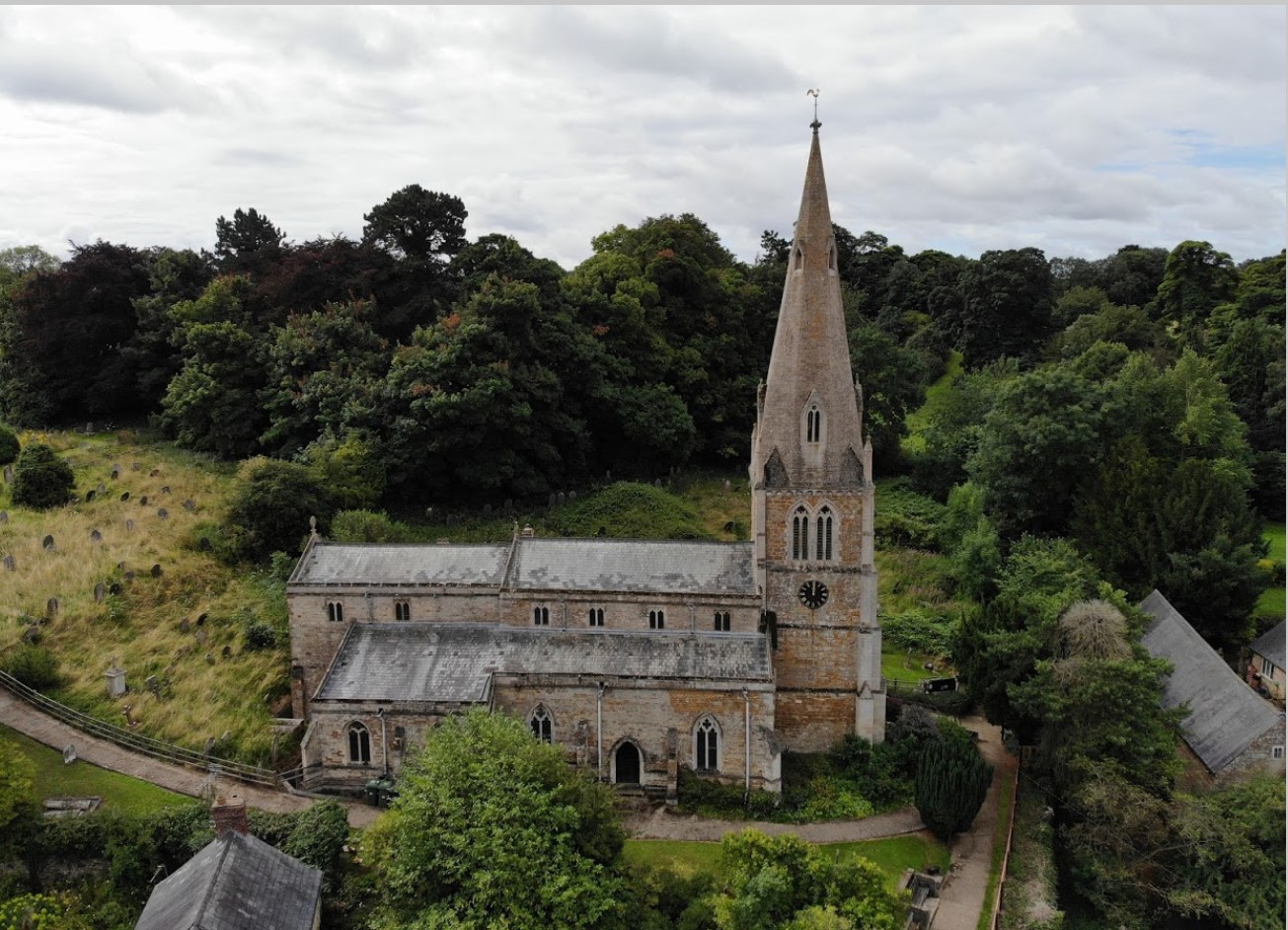
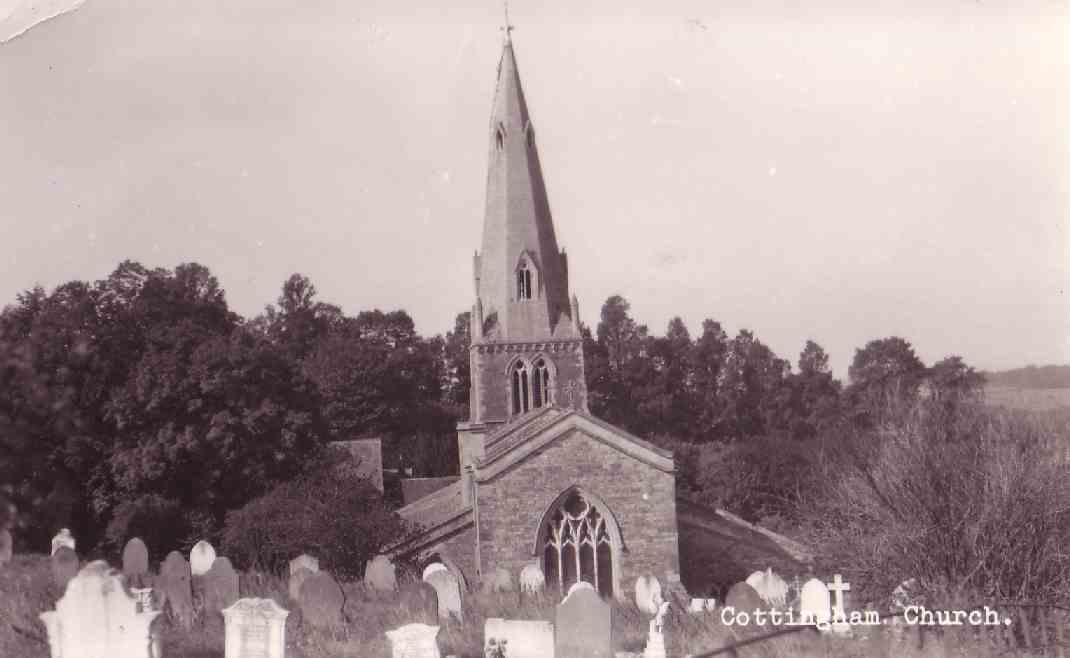
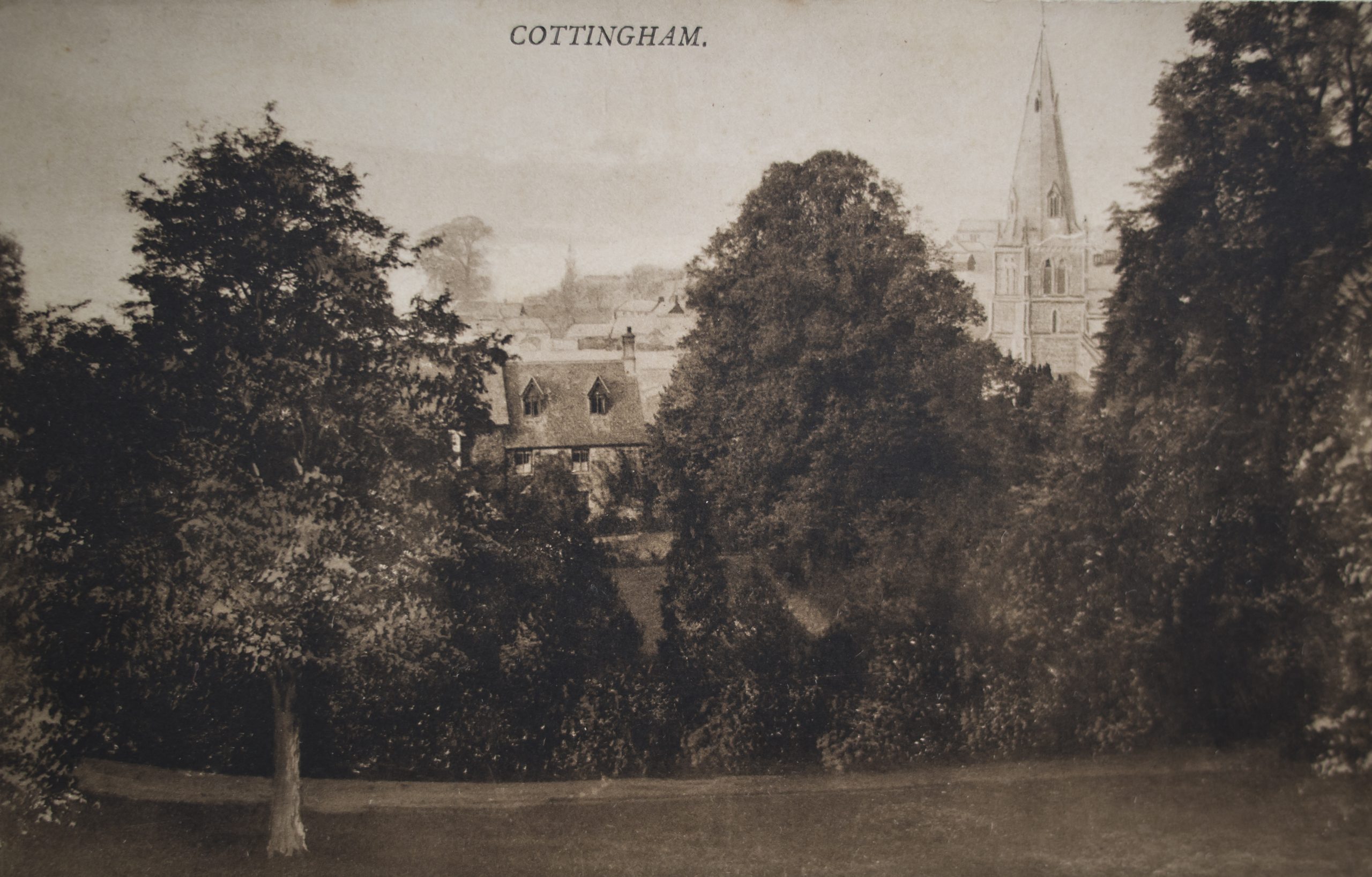
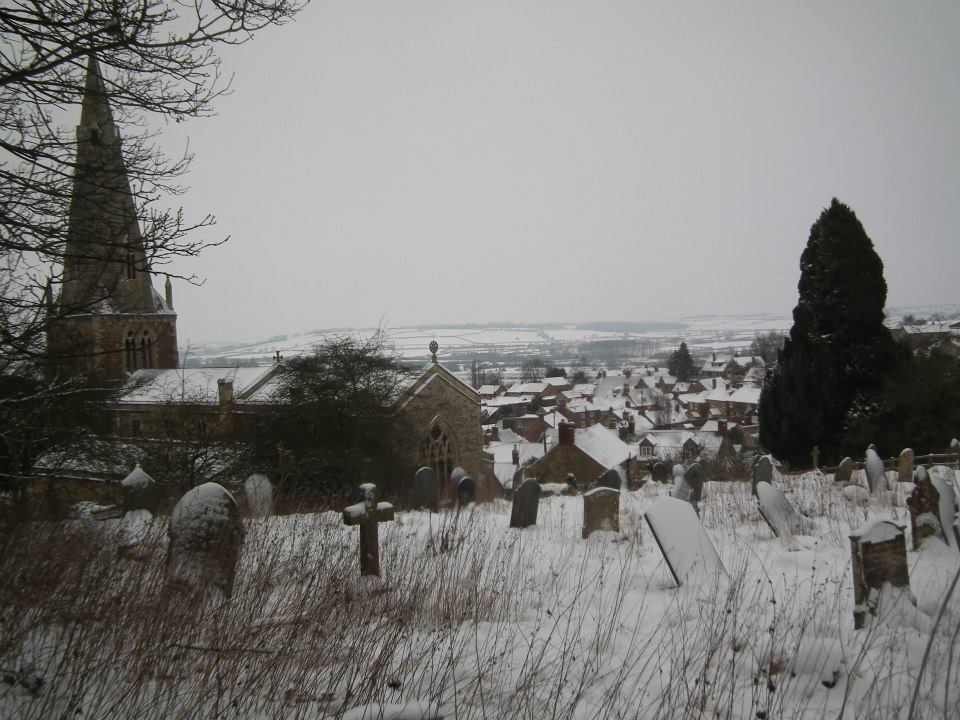
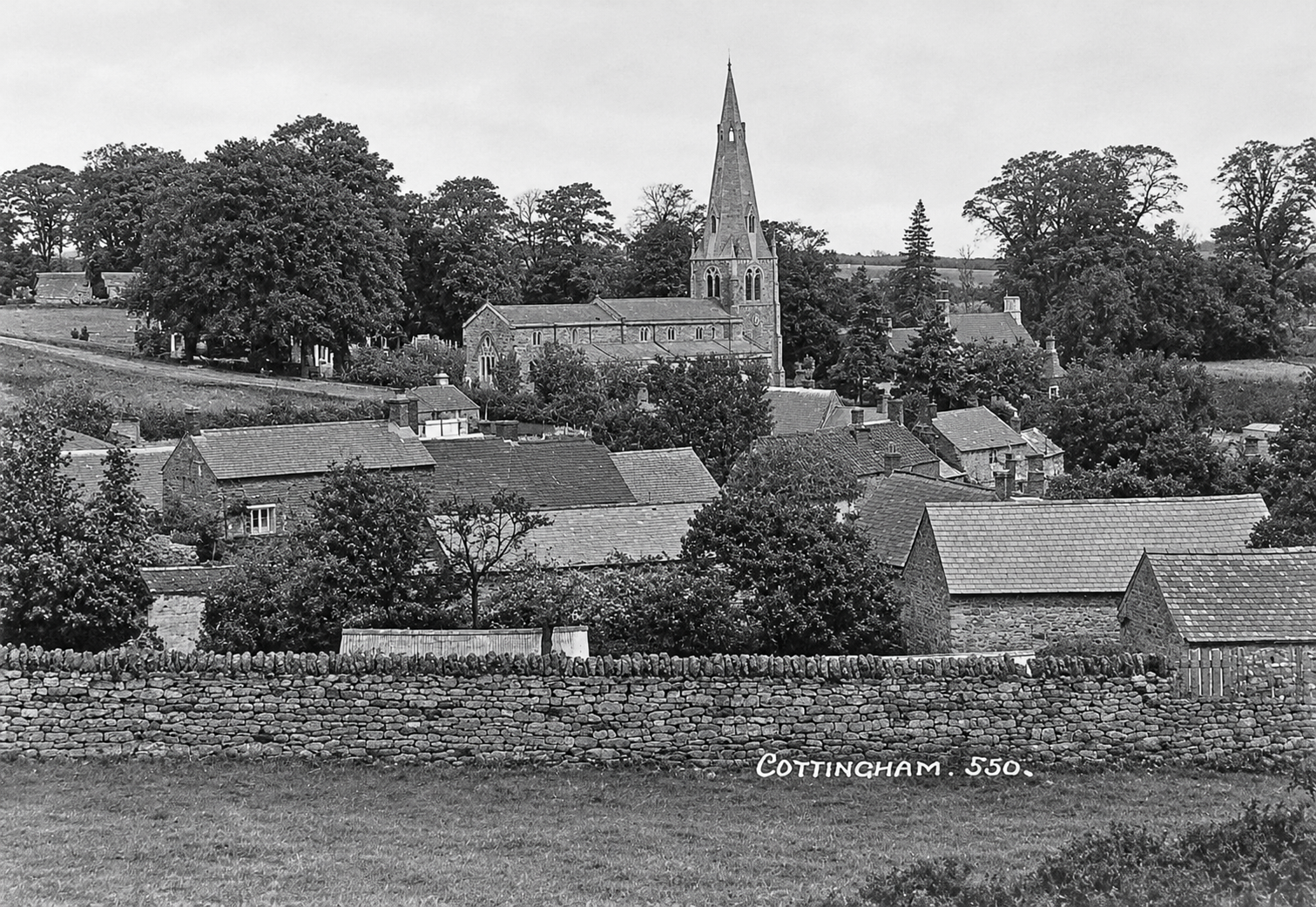
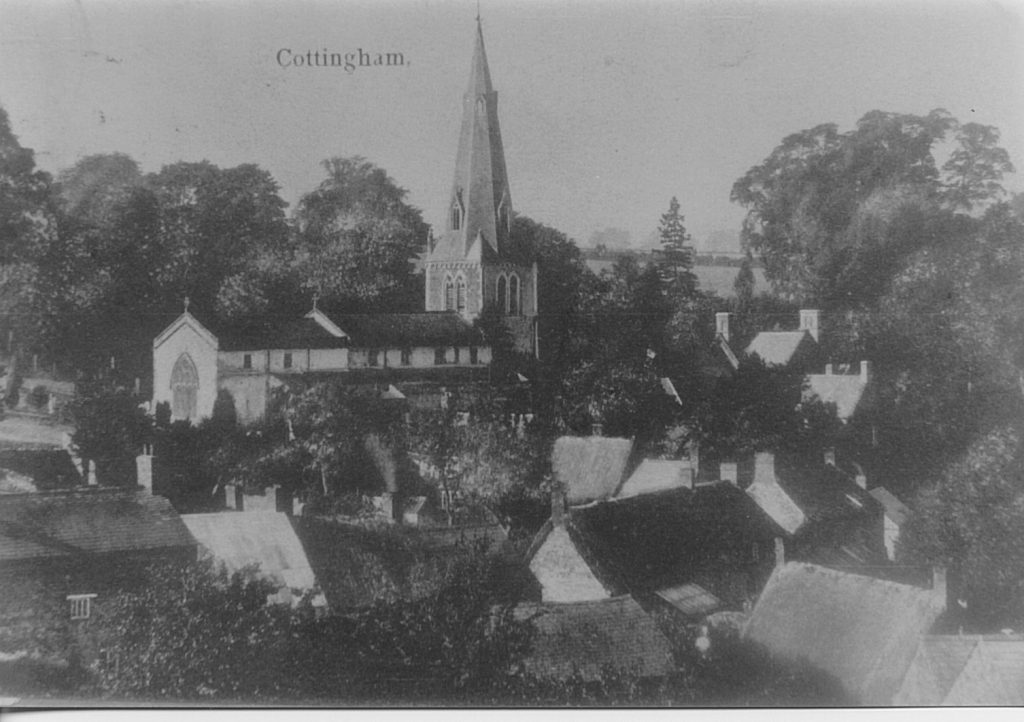
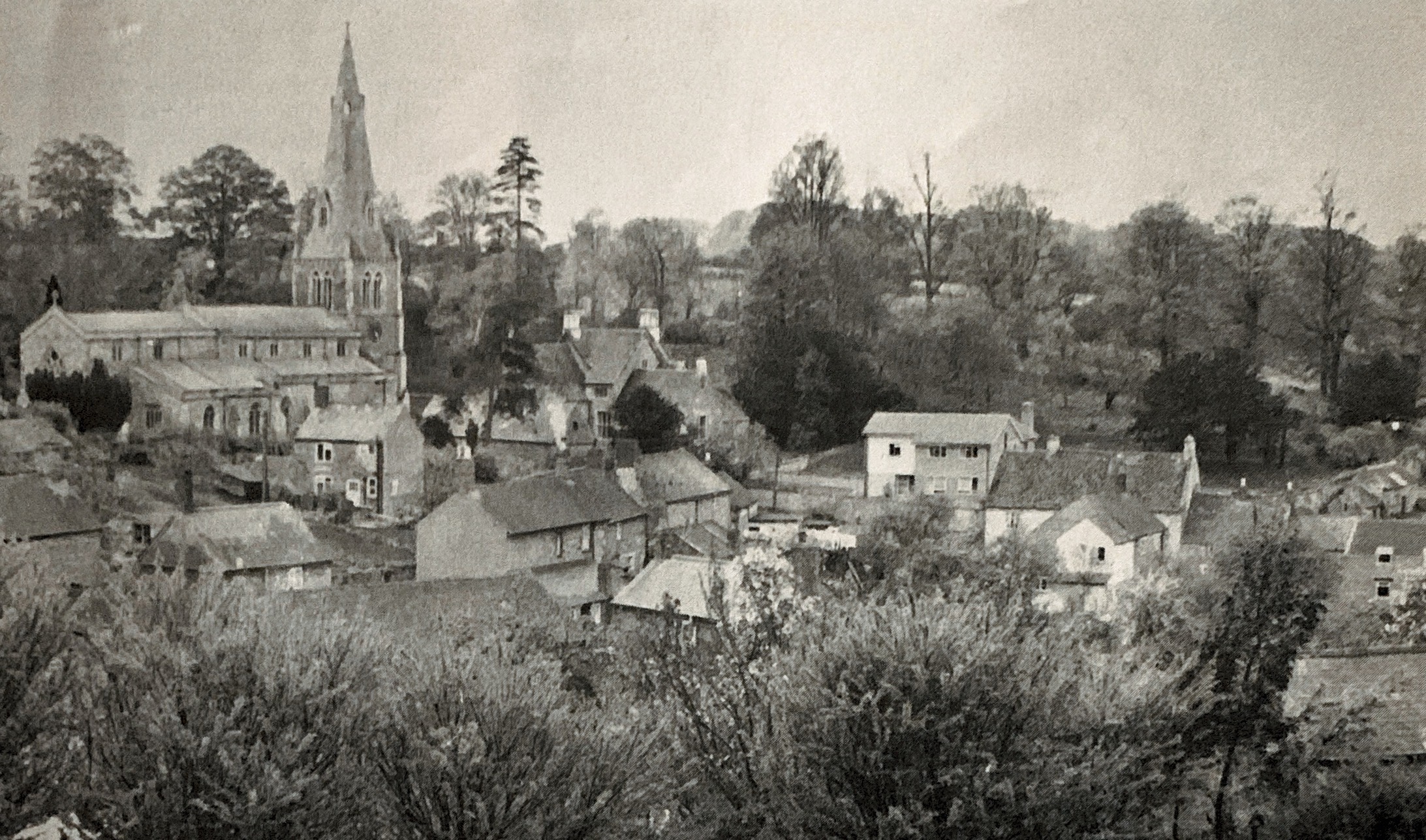
The Parish Church of St Mary Magdalene dates from the 13th Century. The oldest part of the church is the square Norman tower which retains its Norman window. The spire was added in the 14th Century. Most of the rest of the church that we can see today was built in the 15th Century and the church underwent major restoration in 1850 when a transept was added.
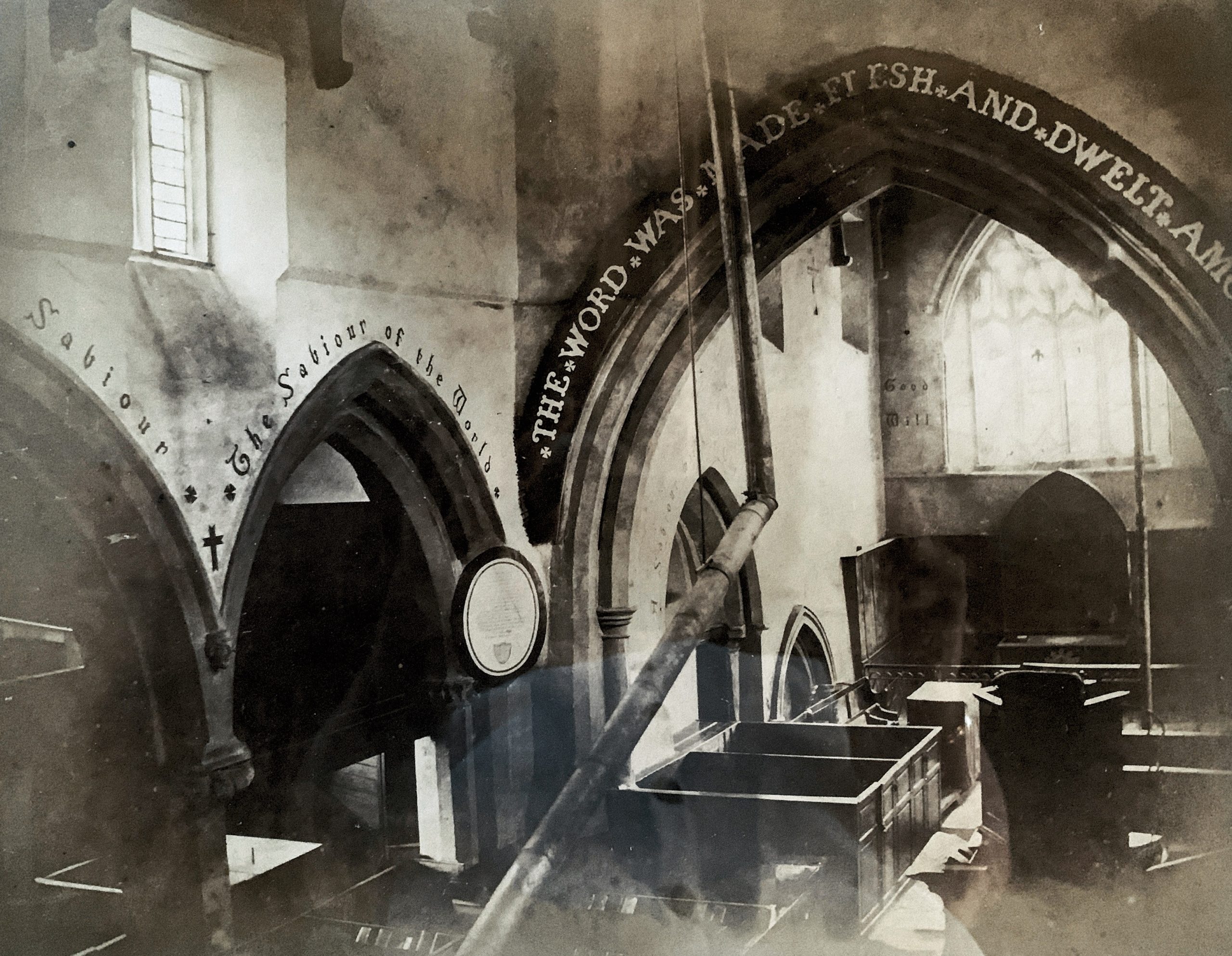
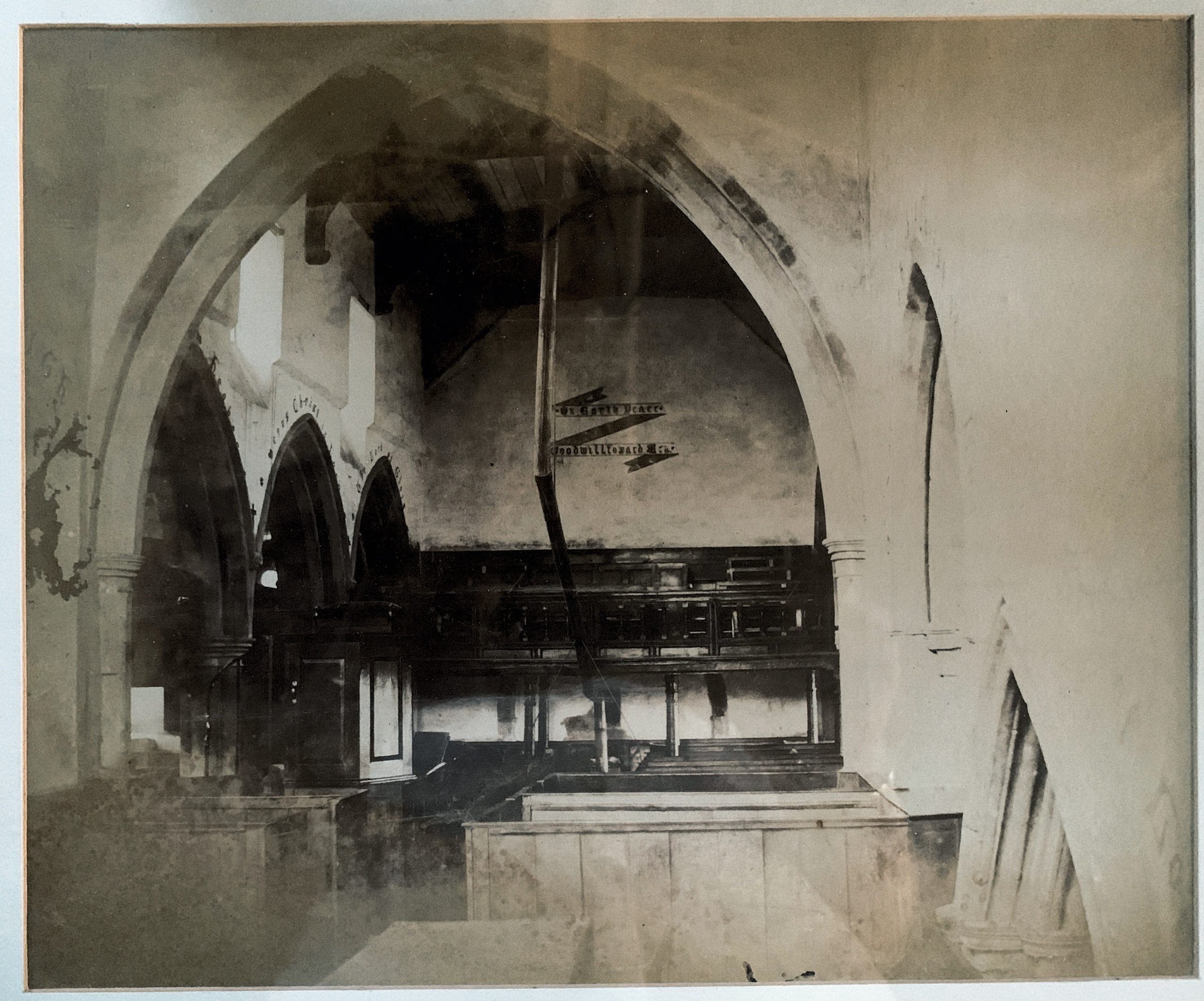
The two photos below were taken in Victorian times when the church had wooden pews throughout and a rather unsightly heating pipe protruding into the nave. The archway into the bell tower was completely blocked off with a raised wooden gallery across it. At this time, the bell tower would have been accessed through the small door in the entrance vestibule.
There are inscriptions around the top of many of the arches. The ones we can make out are as follows. North Aisle: The Savoiur of the World; Chancel Arch: THE WORD WAS MADE FLESH AND DWELT AMONGST US (John 1:14). On the altar wall itself at the end of the chancel we can see the words Good Will inscribed. In the South Aisle, we can read the inscriptions Jesus Christ is Lord (Philippians 2:11) and The Lord is Glorious. The oval plaque that you can see on the side of the arch on the North Aisle is a memorial erected to former Lord of the Manor Thomas Medlycott in 1761 by his daughter Barbara. This plaque has since been moved into the North East vestry.
In the north arcade of the church (left hand side as you walk in) there is a column with an interesting frieze around the top. It depicts four figures lying head to head – a lady, two armed knights and a clergyman. They are thought to be St Mary Magdalene, the Abbot of Peterborough and the Medieval Lords of the Manor for Cottingham and Middleton, symbolising the authority of the church, the parish and the two manors. (from the 1976 notes on the church by John Tipper). There is a second pillar engraved with a dwarf, a mythical beast and a third depicting two more ladies, again lying head-to-head.

In the bell tower, there is a wooden board from 1760 with the will of William Downhall, who left 18 acres of land in his will for the poor of Cottingham and Middleton. The church also has a Green Man carving, a pagan symbol of renewal and rebirth which was adopted by the Medieval church. The 13th century Easter sepulchre is also worthy of note.
The church has five bells, with the tenor weighing just over 11cwt and a key note of G#. In the Middle Ages, following afternoon service on Christmas day, apples were thrown down to the village children, originally from the belfry of the church, but later from outside The Rectory. When there was a death in the village, the church bells were rung three times for a man, and twice for a woman, to let the villagers know that someone had passed away.