On this page, we look at some of the main trades and occupations for people of the villages over the years. You can also see lists of village tradespeople in the Trade Directories.
Hand loom weaving
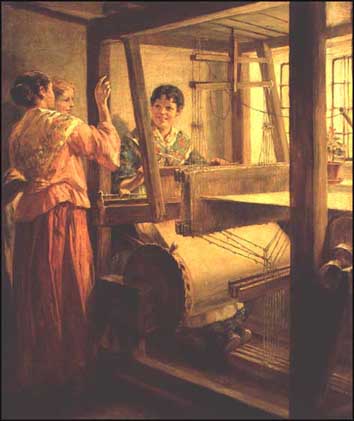
Between c1650 and the early 1800s, hand loom weaving was the most common occupation in the western area of Rockingham Forest. In 1777, there were 23 weavers living in Cottingham, and you can see some of these men listed on the 1777 militia list.
However, in the erly years of the 19th Century, competition from large industrial mills led to the collapse of the hand loom weaving industry.
This caused a great deal of poverty and hardship for local people, especially in Corby where, at one time, around 89% of the working population was engaged in weaving and related activities. In Kettering, with over a third of the population on poor relief, the situation became so desperate that the town declared itself bankrupt!
By 1841, the industry had all but disappeared in the area.
Farming and agriculture
In medieval times, a church bell was rung in the morning (usually 5am) to summon villagers to work and, in Cottingham, another bell was rung at noon to tell workers in the fields that it was midday. Within Rockingham Forest, there were areas of common grazing land for Cottingham and the neighbouring villages. Animals grazing on this land were branded with a symbol to identify them according to the local rhyme “Oakley O, Gretton G, Corby cross and Cottingham key”. The key and cross symbols for Cottingham and Corby were also used on a boundary stone which used to stand on Cottingham Road.
In the 17th Century, it was common for villagers to leave land, animals and produce to their families in their wills, for example Thomas Peake, husbandman, Cottingham (Wd 13 Feb 1690) left five woods of land in Cottingham to his wife Elizabeth and eldest son Thomas, and Elizabeth Peake, widow, Cottingham (Wd 30 Jan 1698) left the brown buck mare to Thomas Peake, a cow to Ann Chapman and, to John Peake, ‘three maires and horse and geare and the waggon cart plows and harrows’ With thanks to Maureen Bryson for the will information.
By the mid 19th Century, farming and agriculture had taken over from weaving as the main source of employment for village men, with more than half of the village’s men working on the land. There would also have been seasonal work for women and children. There are lots of children, as young as seven years old, listed on the village Census returns as bird scarers and the village infants’ school journal tells us that children were absent from school at Harvest time due to helping in the fields.
Daphne Joiner (nee Cannam)’s father was forced to leave school at 12 (in 1920) to work on his father’s farm in Church Street. She recalls her father telling her tales of walking to Market Harborough with cattle for the market, and milking cows in the fields where Cottingham school is today before carrying the milk back to Church Street in pails on a yoke. He ran away from home at the age of 16 to become a gardener at Rockingham Castle!
Estate workers and gamekeepers
Rockingham Forest Estate offered work as estate labourers and carpenters, with a number of Forest Lodges on the outskirts of the villagers occupied by gamekeepers.
There have been various forest lodges recorded in the villages over the years.
- In 1841, South Lodge was occupied by agricultural labourer Thomas Woolly, and family and East Lodge by gamekeeper William Haylock and family
- Rockingham Park Lodge was occupied by Percy Loake and family in 1881 and, in 1901, by gamekeeper/tender Henry Loake and family.
- In 1871, Henry Damms was living in Park Lodge
- The Countess of Cardigan Farm Lodge was occupied in 1881 by William and Ellen Wilson and in 1901, Cardigan Farm Lodge was occupied by servant John Wardle, whose profession is recorded as cattleman on farm. The Countess of Cardigan was a major landowner in the area. We get a clue to this from a Barnwell St Andrew burial record dated 3 September 1753 for ‘William Stanley (from ye castle) steward to ye Dutchess of Manchester & Countess of Cardigan for these and their adjoining lands & Manors’. Thanks to Maureen Bryson for this information.
- In 2001, the only remaining lodge was Keeper’s Lodge, which is located on Rockingham Castle Estate, to the left as you head out of the village on Corby Road.
Iron and limestone quarrying
Ironstone quarrying is one of the earliest industries to have built up in the area, owing to the large ironstone deposits to be found underground. Birmingham industrialist, Samuel Lloyd started quarrying in Corby in 1880 and there were also quarries at Rockingham and Desborough.
There is mention of a quarry at Cottingham next to the ‘New Coppice’ wildlife trust site, a narrow strip of ancient woodland near to the medieval track of Middleton Lane, which is the road that runs across the top of the Dale. In 1901, there were 17 Cottingham men employed in ironstone quarrying.


The area is also rich in limestone and, in the 18th and 19th centuries, limekilns were built across the UK to burn ironstone to make lime, a white powdery substance used to make mortar, plaster and fertiliser.
The 1887 OS map shows a limekiln on land leading off Water Lane and the remains of the limekiln can still be seen on this land. Limestone was tipped in from the top of the kiln on to a coal fire, then a layer of coal was laid over the top followed by more limestone, more coal and so on. The furnace had a wide arch at the front, to allow in a supply of air at the base to keep the fire going and provide oxygen for the conversion process. As the fire burned, the lime was raked out of the furnace and taken away.
Half way down Water Lane, on the opposite side to the cottages, is a small stone building that was used as an Assay Office for the limekiln, where carts would stop to have their cargo weighed before leaving the village.
Building and construction
Villagers have been employed in the building trade throughout the 19th and 20th Centuries. On the Census returns, we can find bricklayers, stone masons, sawyers, carpenters, plasterers, slaters and bricklayers and brickmakers.
Small brickworks sprang up around the area from the early 1800s, with bricks being used mainly for chimneys and roofs, and for repairs. The coming of the railway to the area in the 1870s caused a resurgence in the industry, with bricks needed for bridges, viaducts etc.
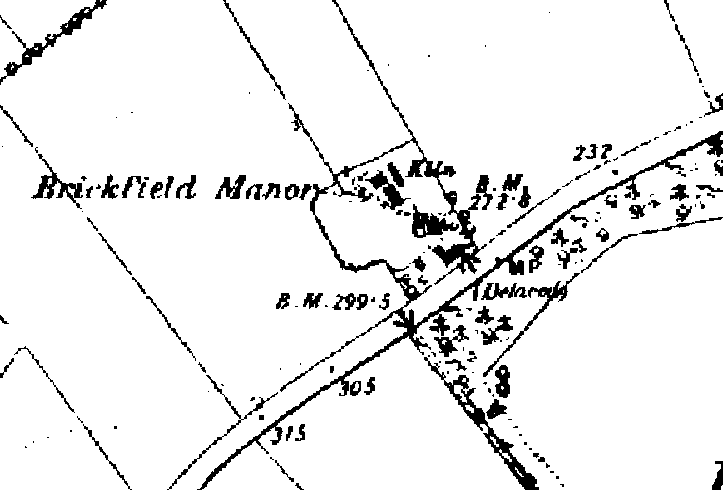
The 1887 OS map shows a brickyard with kiln at the top of Rockingham Road. In 1901, there were six households recorded at Brickfield Cottages, next to the brickworks and one of the occupants of these cottages (Charles White) was a brickmaker. These cottages have now been turned into a single dwelling, known as Brickfield House.
Textiles
A form of tanning called tawing took place in Cottingham and Middleton in the 18th Century, a process where hides were tanned with a solution of alum and salt. In 1841, 30 year old Charles Vickers of Church Lane (now Water Lane) was employed as a tanner.
In the mid 1800s there were villagers working as tailors and shoe makers. In 1841, John Mays of King Street (now Church Street) and Francis Ingram of Priory Street (now Corby Road) were working as tailors.
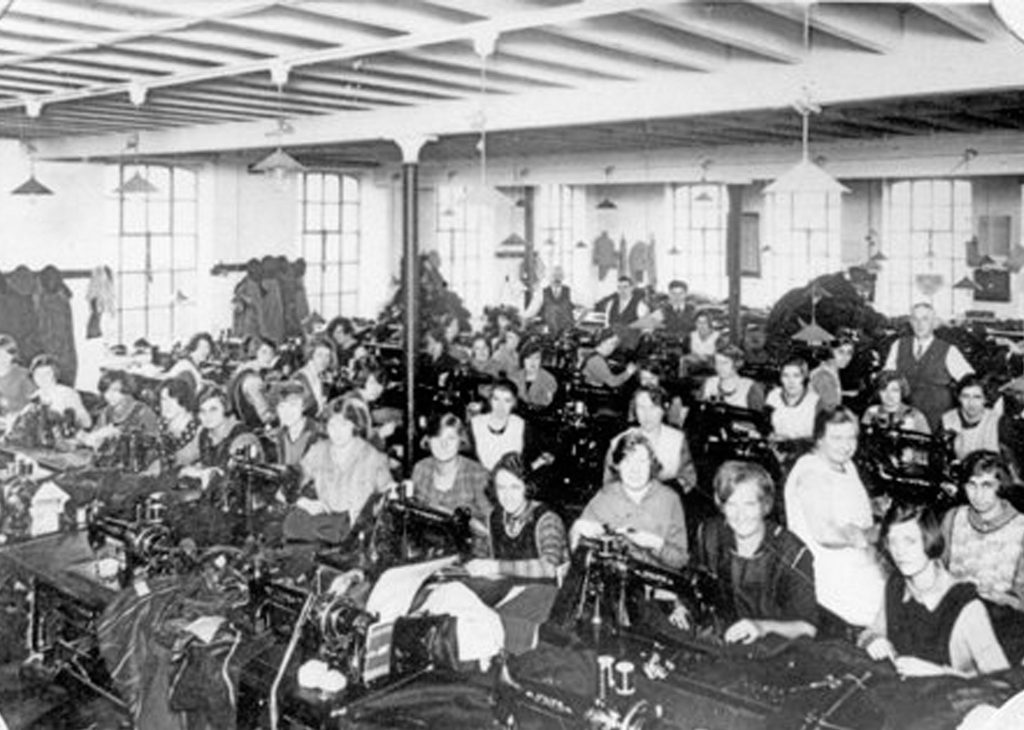
The Wallis and Linnell clothing factory which opened on Rockingham Road in 1874 employed 31 villagers (25 women and 6 men). The single women who went out to work were employed mainly as tailoresses and machinists at the local clothing factory, or as domestic servants, but not one of the married women in Cottingham went out to work. How times change!
Domestic service and gardening
Domestic service provided employment for single women in the villages, and also for some men and young teenagers. In 1841, 20 year old Catherine Platt was living at The Rectory on Church Street as a ladies maid, and in 1901 there were three live-in servants at The Rectory – a housekeeper (Caroline Coles, 21), a cook (Alice Brown, 24) and a page boy (John Cook, 13). There were also seven domestic staff and a gardener living in at Bury House.
In Victorian times, live-in servants, who had all their expenses (food, lodging, clothes etc) taken care of, earned as little as £10 a year, or £77 in today’s money. Source: The Victorian Web
Other domestic roles in the villages included ‘cleanwoman’, charwoman and nursemaid and, in 1901, there were two widowed ladies living in Water Lane working as laundresses (Amelia Cunsley aged 64 and Mary Patrick aged 41).
Other occupations
Tallow chandler (candle maker).